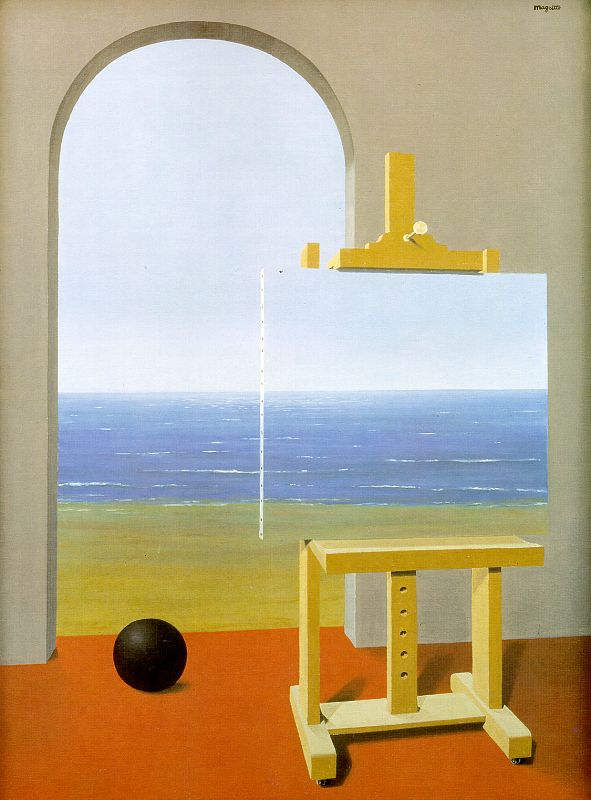
"Out of time, out of touch." That's exactly how I feel when I listen to the debut album of Group Rhoda, the solo project of San Francisco's Mara Barenbaum. Like fever dreaming, unsure if one is waking up back into reality or if the dream is just beginning, there's a disorienting sensation of having been dropped into the middle of an exotic, unplaceable, detached nowhere realm. Synthesizers hiss and rise like steam before tracelessly vapourizing into the night sky ("Virtual Dancer"). Jungly percussion melts and drips out of the humid atmosphere ("Hi Rise"). I can't help but envision sultry, Surrealist dreamscapes painted in glowing neons that fade to soft pastels, like Henri Rousseau's jungle scenes doused in Dali's runny aesthetic.
On first impression, Out of Time, Out of Touch may seem thinly layered with very little to conceal. But listen closer, and you'll discover a bounty of life: warm beats patter like paws on the leafy, overgrown forest floor. Electronics blink in and out of sight like fireflies. Shakers rattle like creatures rustling in the bushes. You may feel an out-of-body lightness in this mirage-like environment, but the tender crackles of branches and bug-eaten logs beneath you remind you in your delirium of your weight. It's curiosity and intrigue over this microcosmic world of mystery - at the time when all of the unseen creatures of the night come to life and thrive (and feast) - that pulls listeners into Group Rhoda's fantastic world.
Though Group Rhoda presents an inviting scene into her tropical world on her Magritte-like album cover (a more specific, difficult-to-find 1945 version of his painting The Human Condition also depicts a bedroom and an open door), Out of Time, Out of Touch is not as innocuous as she leads one to believe. The open door and added allure of a comfortable bed are like the vivid spots and stripes on a frog: one can't help but be cautious of the poisonous dangers that lay in wait in her brightly coloured world. "Can you hear me call?" she asks no one in particular on "At the Dark," seemingly reading your mind. "'I'm looking at you / But you're not looking back," comes her reply on "Silence."
Though you still can't see or hear what's lurking in the dark, invisible to the naked eye, "Nightlight" seems to depict the moment you realize without a doubt you're being stalked. By then, it's almost too late: your pulse rises. Panic intensifies. Desperation sets in. With no escape in sight, album closer "Fire" best illustrates the frantic last dash for a way out after shaking free from whatever mystical force has tried to wrap its seductive, predatory spell over you. You stumble and trip - become entangled in vines as the unseen prowls - and all you can hear is the siren's call ringing behind you: "There is a light / You can stay, if you want to / Stay if you want to / Stay if you want to." But if you've found yourself this deep in the bush, you don't have a choice; Group Rhoda already has you where she wants you.
Saturday, February 9, 2013
Friday, February 8, 2013
Beasts Bellow Or Howling Hell Blues: Six Organs of Admittance with Low Hums and Mirror Lake at the Waldorf Hotel
October 2, 2012
The Waldorf Hotel
Vancouver, British Columbia
There are two primary ways to make interesting music: by having a completely original sound incomparable to anything that has previously existed or by blending pre-existing styles in ways never (or at least seldom) heard before. Though I had never heard of the Vancouver-based Mirror Lake prior to the show, they immediately impressed me as a case of the latter.
Right away, Mirror Lake captivated me with their brooding Turn on the Bright Lights-era Interpol hooks and similar steady builds and tremolos. Mirror Lake's pounding bass, riddling the audience's ears like rounds from a Gatling gun in tandem with drum-work brimming with fills, could have emanated from Carlos D. and Sam Fogarino themselves, if the audience didn't know better. "All right, so Mirror Lake's a really tight post-punk group. Sweet," I thought. But then, lapping up like agitated waves from below the surface of post-punk rhythms and tempos, came lashes of psychedelic keys and dual guitars. Mirror Lake was the first band I ever heard that blended post-punk and psych or at least the first to have done so with so much skill that I actually noticed.
As the next band, Seattle's Low Hums, indicated, the night was only about to become even more psychedelic. On record, Low Hums often hint at Swans-style post-rock; at times, Michael Gira himself even seems to possess lead-singer Jonas Haskins, albeit at Gira's tamest. But although the pastoral psych quartet did not take long to break into a bluegrass-jam with banjo, shaker and lap steel, Low Hums were able to just as quickly turn around and conjure a Judgment Day-ominous riff with as much menacing, slow-brew suspense as any doom-psych band. Their third-last song in particular, with several false disintegrations in the forms of droning Brian Jonestown Massacre-like interludes, could have been dubbed space-rock, as it rocketed me into a different galaxy. Following that cosmic experience was another song that could have fit seamlessly amongst the BJM's oeuvre, this one alongside their catchier, Matt Hollywood-penned hits.
The psychedelic attack peaked with San Francisco's Six Organs of Admittance, the solo project of Comets on Fire guitarist Ben Chasny. Backed by a three-piece band, anyone who had heard Six Organs' latest album Ascent probably knew why Chasny enlisted the extra muscle. I, however, was not one of those people. I had known Six Organs of Admittance for delicate, introverted neo-folk, so when the first sounds that erupted from the stage with a ferociousness that could have blown the (faux-?)bamboo finish off of the walls, I was more than taken aback. It was difficult to believe that the music with which I was familiar - which I had expected - was borne of the same creature that was attacking every part of his guitar with Palaeolithic savagery right before my eyes. But observe Chasny closely, and one would have seen that his furious attack was merely a veneer - that he was, in fact, dissecting his guitar as precisely as a surgeon manoeuvres its knife.
The only serene moment of Six Organs of Admittance came during their only encore, Chasny's sole unaccompanied performance of the night. I wish I knew the name of the song, because it was the most pleasant way to close the show, aside from my successful acquisition of their set list.
With a surprise as good as Six Organs of Admittance at the Waldorf, it was a good thing I did not remember until at least more than halfway through their set that my friend, with whom I had attended the show, described Ascent some weeks back as very much a hard rock record. She wasn't kidding. The crispness of Chasny's playing was ultimately key in the indelible impression Six Organs left on me, his guitar-work sharp amongst the frenzy of every other instrument. If more performers can learn a lesson from Six Organs of Admittance in this respect, I would remember far more shows for the music itself rather than merely their volume and muddled sloppiness.
The Waldorf Hotel
Vancouver, British Columbia
There are two primary ways to make interesting music: by having a completely original sound incomparable to anything that has previously existed or by blending pre-existing styles in ways never (or at least seldom) heard before. Though I had never heard of the Vancouver-based Mirror Lake prior to the show, they immediately impressed me as a case of the latter.
Right away, Mirror Lake captivated me with their brooding Turn on the Bright Lights-era Interpol hooks and similar steady builds and tremolos. Mirror Lake's pounding bass, riddling the audience's ears like rounds from a Gatling gun in tandem with drum-work brimming with fills, could have emanated from Carlos D. and Sam Fogarino themselves, if the audience didn't know better. "All right, so Mirror Lake's a really tight post-punk group. Sweet," I thought. But then, lapping up like agitated waves from below the surface of post-punk rhythms and tempos, came lashes of psychedelic keys and dual guitars. Mirror Lake was the first band I ever heard that blended post-punk and psych or at least the first to have done so with so much skill that I actually noticed.
As the next band, Seattle's Low Hums, indicated, the night was only about to become even more psychedelic. On record, Low Hums often hint at Swans-style post-rock; at times, Michael Gira himself even seems to possess lead-singer Jonas Haskins, albeit at Gira's tamest. But although the pastoral psych quartet did not take long to break into a bluegrass-jam with banjo, shaker and lap steel, Low Hums were able to just as quickly turn around and conjure a Judgment Day-ominous riff with as much menacing, slow-brew suspense as any doom-psych band. Their third-last song in particular, with several false disintegrations in the forms of droning Brian Jonestown Massacre-like interludes, could have been dubbed space-rock, as it rocketed me into a different galaxy. Following that cosmic experience was another song that could have fit seamlessly amongst the BJM's oeuvre, this one alongside their catchier, Matt Hollywood-penned hits.
The psychedelic attack peaked with San Francisco's Six Organs of Admittance, the solo project of Comets on Fire guitarist Ben Chasny. Backed by a three-piece band, anyone who had heard Six Organs' latest album Ascent probably knew why Chasny enlisted the extra muscle. I, however, was not one of those people. I had known Six Organs of Admittance for delicate, introverted neo-folk, so when the first sounds that erupted from the stage with a ferociousness that could have blown the (faux-?)bamboo finish off of the walls, I was more than taken aback. It was difficult to believe that the music with which I was familiar - which I had expected - was borne of the same creature that was attacking every part of his guitar with Palaeolithic savagery right before my eyes. But observe Chasny closely, and one would have seen that his furious attack was merely a veneer - that he was, in fact, dissecting his guitar as precisely as a surgeon manoeuvres its knife.
The only serene moment of Six Organs of Admittance came during their only encore, Chasny's sole unaccompanied performance of the night. I wish I knew the name of the song, because it was the most pleasant way to close the show, aside from my successful acquisition of their set list.
With a surprise as good as Six Organs of Admittance at the Waldorf, it was a good thing I did not remember until at least more than halfway through their set that my friend, with whom I had attended the show, described Ascent some weeks back as very much a hard rock record. She wasn't kidding. The crispness of Chasny's playing was ultimately key in the indelible impression Six Organs left on me, his guitar-work sharp amongst the frenzy of every other instrument. If more performers can learn a lesson from Six Organs of Admittance in this respect, I would remember far more shows for the music itself rather than merely their volume and muddled sloppiness.
Labels:
Live review,
low hums,
mirror lake,
six organs of admittance
Nelly Furtado - "Parking Lot"
I hadn't liked a Nelly Furtado song since Whoa, Nelly!, until now:
Tuesday, February 5, 2013
"The Kids Are Alright?"
"What is the difference with someone going to The Vogue and pre-drinking. Or before their prom? Or drinking outside Rogers Arena before a hockey game… I've been to Canucks games and there are always abusive comments and I've seen scuffles, and so, do you just shut everything off? No alcohol sold at hockey games?" ...
If the city decided to make all hockey games 19+ or if they banned all alcohol from Rogers Arena the backlash from Vancouverites would be swift and intense. Why can a 16-year-old go to a hockey game where alcohol is served in public, but can't see a band at a venue where alcohol is in a sectioned off area, or not even in the venue at all?
...
"I've been involved with or been a patron of very unsafe, illegal venues, and it has made me realize that when that is the only option for underage kids to see live local music, its kind of setting them up for situations they might not be able to handle, such as drugs, drinking, and indoor smoking," says a concerned [Sarah] Cordingley. "Kids are going to find a way see bands, and if these illegal and unsafe venues are the only option, these shows will keep happening," she says.
Full article at BeatRoute.
If the city decided to make all hockey games 19+ or if they banned all alcohol from Rogers Arena the backlash from Vancouverites would be swift and intense. Why can a 16-year-old go to a hockey game where alcohol is served in public, but can't see a band at a venue where alcohol is in a sectioned off area, or not even in the venue at all?
...
"I've been involved with or been a patron of very unsafe, illegal venues, and it has made me realize that when that is the only option for underage kids to see live local music, its kind of setting them up for situations they might not be able to handle, such as drugs, drinking, and indoor smoking," says a concerned [Sarah] Cordingley. "Kids are going to find a way see bands, and if these illegal and unsafe venues are the only option, these shows will keep happening," she says.
Full article at BeatRoute.
Labels:
all ages ban,
all-ages venues,
article,
safe amp society,
vancouver
Monday, February 4, 2013
Icona Pop Feat. Charli XCX - "I Love It"
I can't get enough!!! Yes, I heard it on Girls. The show's quality may bounce all over the place, but it's music choice is still pretty consistently good:
Three New Diane Birch Tracks
Diane Birch has released three new tracks from her upcoming reportedly eponymous second album. Two of the tracks even have videos. She's already played a couple of shows in New York City, as well as a living room performance streamed from her Williamsburg apartment. It's safe to say we're on the cusp of a new album. Check out the videos for "Unfucked" and "Superstar" as well as the track "Speak a Little Louder" on her media page.
With a new backing band in tow, "Unfucked," "Superstar" and "Speak a Little Louder" all find Diane Birch expanding her intimate Carol King piano pop into more sublime balladry, experimenting with grandiose harmonies, vocal reverb and minor delay and generally more complex arrangements. Birch channeled her classic influences almost without a filter on Bible Belt (her deeply personal lyrics aside), and The Velveteen Age EP consisted exclusively of her putting her own spin on her favourite Goth bands, covering songs by Joy Division, Echo and the Bunnymen and Souxsie and the Banshees among others. Her new album is shaping up to sound like the logical next step: while some of her 80s power ballad influences still naturally trickle through, Birch is really beginning to find her own sound.
Successful second albums are tricky to pull off, especially when following up a debut as flawless and graceful as Bible Belt. But by the sound of Birch's new songs, she's smartly avoiding the mistake of trying to recreate her success, instead opting to make a record that will be equally strong but that will ultimately stand alone from the rest of her work.
With a new backing band in tow, "Unfucked," "Superstar" and "Speak a Little Louder" all find Diane Birch expanding her intimate Carol King piano pop into more sublime balladry, experimenting with grandiose harmonies, vocal reverb and minor delay and generally more complex arrangements. Birch channeled her classic influences almost without a filter on Bible Belt (her deeply personal lyrics aside), and The Velveteen Age EP consisted exclusively of her putting her own spin on her favourite Goth bands, covering songs by Joy Division, Echo and the Bunnymen and Souxsie and the Banshees among others. Her new album is shaping up to sound like the logical next step: while some of her 80s power ballad influences still naturally trickle through, Birch is really beginning to find her own sound.
Successful second albums are tricky to pull off, especially when following up a debut as flawless and graceful as Bible Belt. But by the sound of Birch's new songs, she's smartly avoiding the mistake of trying to recreate her success, instead opting to make a record that will be equally strong but that will ultimately stand alone from the rest of her work.
Sunday, February 3, 2013
Back To the Media Club
Angel Olsen's debut album Half Way Home was one of my favourites releases of 2012, and even though I'm 0-2 for good experiences at the Media Club, I'll be going back when she comes to Vancouver on April 21. Here's "The Waiting," the least doomy song on the album:
Subscribe to:
Posts (Atom)